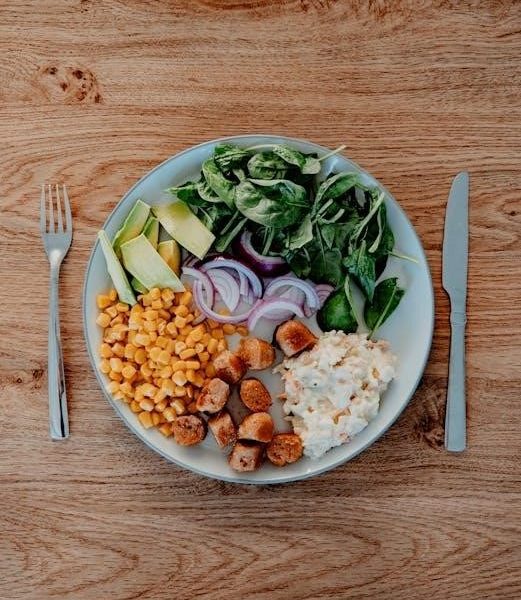
Macro Cheat Sheet PDF: A Comprehensive Plan
Macro cheat sheets, often in PDF format, consolidate vital information for diverse applications – from Excel automation to dietary tracking and even historical computing contexts.
These resources offer quick references for macros in photography lenses, LISP programming, and calculating personalized calorie/macro intake for fitness goals.
A well-structured PDF simplifies complex concepts, providing readily accessible guidelines, conversion charts, and sample layouts for efficient macro management.
Macro cheat sheets, frequently distributed as PDFs, represent condensed repositories of essential information tailored to a surprisingly broad spectrum of disciplines. Initially conceived for streamlining complex processes, these guides have evolved beyond simple automation tools. They now serve as invaluable quick references for individuals navigating the intricacies of Excel macros, the historical nuances of LISP programming, and the precise demands of specialized fields like macro photography.
The core function of a macro cheat sheet is to distill extensive knowledge into an easily digestible format. This is particularly crucial for those seeking to optimize their dietary intake, requiring rapid access to calorie and macro nutrient guidelines. A well-designed PDF cheat sheet empowers users to efficiently define goals, calculate ratios, and track progress, ultimately simplifying the path to achieving desired outcomes.
Essentially, these cheat sheets are about accessibility and efficiency, bridging the gap between complex concepts and practical application.
What are Macros?
The term “macro” possesses a fascinatingly diverse history, originating not with Microsoft, but within the realm of early computer science. Initially, as exemplified by the IBM 705, a macro instruction represented a shorthand for a longer sequence of commands. This concept evolved, finding expression in LISP as macro definitions – essentially code that writes code. Today, the definition expands further, encompassing automated tasks within applications like Excel.
In the context of a macro cheat sheet, a macro fundamentally represents a repeatable process. Whether it’s automating a series of Excel functions, defining a code transformation in LISP, or meticulously tracking dietary intake, a macro is a pre-defined set of instructions.
Ultimately, a macro is a tool for efficiency, allowing users to execute complex operations with minimal effort, and a cheat sheet provides the key to unlocking that potential.
Why Use a Macro Cheat Sheet?
A macro cheat sheet, particularly in PDF format, serves as an invaluable quick reference guide, streamlining complex processes across diverse fields. For Excel users, it eliminates the need to remember intricate VBA syntax, accelerating automation tasks. In photography, it provides instant access to lens specifications like magnification ratios and minimum focus distances.
Dietary macro cheat sheets simplify calorie and nutrient tracking, offering pre-calculated values and conversion charts for efficient meal planning. They are especially useful for those pursuing specific goals like reversing insulin resistance or achieving fat loss.
Essentially, a cheat sheet consolidates essential information, reducing cognitive load and boosting productivity, making it an indispensable tool for anyone working with macros.

Types of Macros & Related Lenses
Macros manifest diversely – in Excel for automation, LISP for code simplification, and photography utilizing specialized lenses for extreme close-ups, each requiring unique cheat sheets.
Excel Macros: Automation Basics
Excel macros are powerful tools for automating repetitive tasks, essentially recording a series of actions and replaying them with a single command. A macro cheat sheet for Excel focuses on the Visual Basic for Applications (VBA) code snippets frequently used.
These cheat sheets typically include commands for data manipulation – like sorting, filtering, and formatting – as well as automating report generation and data entry. Key elements often covered are recording a macro, assigning it to a button, and understanding basic VBA syntax.
A good cheat sheet will also outline common error handling techniques and provide examples of looping structures and conditional statements. Understanding these basics allows users to customize and extend recorded macros, significantly boosting productivity. The goal is to empower users to build their own “robots” within Excel, performing tasks efficiently.
LISP Macros: Historical Context & Definitions
LISP macros represent a foundational concept in computer science, predating many modern programming paradigms. Originating in the late 1950s, the term “macro” initially described a mechanism for transforming code before execution, stemming from IBM 705 implementations. A macro cheat sheet for LISP focuses on these code transformations.
Unlike functions, macros operate on the code itself, enabling powerful metaprogramming capabilities. These cheat sheets detail how to define macros using functions like `defmacro`, and illustrate common patterns for code generation and abstraction. Understanding the historical context – the early use of “macro-instruction” – is crucial.
A useful cheat sheet will showcase examples of hygienic macros, preventing unintended variable capture, and explain how to leverage macros for domain-specific languages. It’s about writing code that writes code, offering unparalleled flexibility.
Macro Photography Lenses: An Overview
A macro photography lens enables capturing incredibly detailed close-up images, revealing a world unseen by the naked eye. A macro cheat sheet PDF often includes specifications for popular lenses, aiding photographers in selecting the right tool. Key features to consider are magnification ratio (typically 1:1 for true macro) and focal length.
Lenses like the SMC Pentax-FA 100mm F2.8 Macro, Sigma 17-70mm f/2.8-4.5 DC Macro, and SMC Pentax 67 / S-M-C Macro Takumar 135mm F4 offer varying levels of performance and compatibility. The Sigma 24mm F1.8 Macro provides a wider field of view.
A cheat sheet will detail aperture settings for depth of field control, focusing techniques, and optimal lighting conditions. Understanding lens characteristics—weight, filter diameter, and minimum focus distance—is vital for achieving stunning macro results.
SMC Pentax-FA 100mm F2.8 Macro Lens
The SMC Pentax-FA 100mm F2.8 Macro lens is renowned for its exceptional image quality, surpassing the SMC Pentax-FA 100mm F3.5 macro. A macro cheat sheet PDF dedicated to this lens would highlight its key specifications: a maximum magnification of 1:1, allowing for life-sized reproduction of subjects.

Optimal aperture settings for sharpness and depth of field would be included, alongside recommended focusing techniques for precise results. The cheat sheet might detail its construction – multi-coated elements minimizing flare and ghosting.
Information on compatible filters and accessories, plus typical use cases (flower, insect, product photography) would be beneficial. A PDF guide could also offer troubleshooting tips for common issues, ensuring photographers maximize this lens’s potential.
Sigma 17-70mm f/2.8-4.5 DC Macro Lens
A macro cheat sheet PDF focusing on the Sigma 17-70mm f/2.8-4.5 DC Macro lens would emphasize its versatility as a standard zoom for APS-C DSLRs. Introduced in 2006, this 15-element/12-group lens offers a useful macro capability alongside its broader focal range.
The PDF should detail the lens’s maximum magnification ratio, noting it’s not a true 1:1 macro but provides close-up functionality. Optimal aperture settings for macro shots, balancing sharpness and depth of field, are crucial.
Information on minimizing distortion at wider angles and chromatic aberration would be valuable. A section on recommended filters and focusing techniques for macro work would complete the guide, helping users leverage this lens’s capabilities effectively.
SMC Pentax 67 / S-M-C Macro Takumar 135mm F4 Lens
A macro cheat sheet PDF dedicated to the SMC Pentax 67 / S-M-C Macro Takumar 135mm F4 should highlight its status as a manual-focus, close-up lens for the Pentax 67 medium format system, introduced in 1971. This lens is prized for its vintage character and optical quality.
The PDF should detail focusing techniques specific to manual lenses, emphasizing precise control for macro work. Recommended aperture settings for maximizing depth of field at close distances are essential. Information on extension tubes to increase magnification would be beneficial.
Guidance on adapting the lens to modern digital cameras, if applicable, and potential challenges with metering should also be included. A section on achieving optimal sharpness and minimizing flare would complete the resource.
Sigma 24mm F1.8 Macro Lens
A dedicated macro cheat sheet PDF for the Sigma 24mm F1.8 Macro lens should emphasize its versatility as a prime lens, weighing 485g with an 82.5mm length and 77mm filter diameter. Its minimum focus distance of 18cm and 1:2.7 maximum magnification are key details.
The PDF should include recommended settings for achieving true macro shots, alongside techniques for utilizing its wider focal length for unique perspectives. Tips on maximizing sharpness, minimizing distortion, and controlling chromatic aberration are crucial.
Information on optimal lighting setups for close-up photography, and suggested accessories like close-up filters, would enhance the resource. A section detailing its diagonal and horizontal field of view (84.1 degrees) is also valuable.

Creating a Macro Cheat Sheet
Macro cheat sheet PDFs demand clear goal definition, whether for reversing insulin resistance, fat loss, or muscle gain, alongside precise calorie and macro intake guidelines.
Effective PDFs involve calculating macro ratios and utilizing tracking tools for consistent monitoring of dietary intake and progress towards established objectives.
Defining Your Macro Goals
Macro cheat sheet effectiveness hinges on clearly defined goals; are you aiming for reversing insulin resistance, aggressive fat loss, consistent weight maintenance, or substantial muscle gain? This initial step dictates the entire structure and content of your PDF.
Specificity is key – instead of “lose weight,” aim for “lose 1 pound per week.” Consider your activity level; a sedentary lifestyle requires different macro allocations than a highly active one.
Your cheat sheet should reflect these nuances. Determine if you’ll prioritize carbohydrate cycling, high-protein intake, or a more balanced approach.
Documenting these goals within the PDF’s introduction provides context and reinforces adherence. A well-defined purpose transforms a simple list of numbers into a powerful tool for achieving tangible results, making the macro cheat sheet a personalized roadmap to success.
Calorie and Macro Intake Guidelines
Your macro cheat sheet PDF should feature clear calorie and macro intake guidelines, typically based on a standard daily intake – often 2000 calories – for easy reference and scaling. These guidelines aren’t rigid, but provide a starting point.
Present ranges for protein, carbohydrates, and fats, expressed both in grams and as percentages of total calories; For example, protein might be 0.8-1.2 grams per pound of bodyweight.
Highlight how these ranges shift based on your defined goals (muscle gain vs. fat loss). Include a disclaimer emphasizing individual variability and the potential need for adjustments based on progress and metabolic response.
A visually appealing table format enhances readability, making it simple to quickly identify appropriate intake levels for your specific needs, solidifying the PDF’s practical value.
Carbohydrate Intake Guide
Within your macro cheat sheet PDF, the carbohydrate intake guide should detail recommended ranges based on activity level and goals. For sedentary individuals, 40-50% of total calories from carbohydrates is a common starting point, equating to roughly 200-250 grams on a 2000-calorie diet.

For moderately active individuals, increase this to 50-60% (250-300 grams). Highly active individuals or those aiming for muscle gain may benefit from 60-70% (300-350 grams).
Emphasize the importance of carbohydrate quality – prioritizing complex carbohydrates like whole grains, fruits, and vegetables over refined sugars.

Include a note on timing carbohydrate intake around workouts to optimize energy levels and recovery. A clear, concise table illustrating these ranges will significantly enhance the PDF’s usability.
Protein Intake Guide
A comprehensive macro cheat sheet PDF must include a detailed protein intake guide. Generally, a baseline recommendation is 0.8 grams of protein per kilogram of body weight (or 0.36 grams per pound). However, this varies significantly based on goals.
For individuals aiming for fat loss, 1.2-1.7 grams per kilogram (0.55-0.77 grams per pound) is often recommended to preserve muscle mass. Those focused on muscle gain may require 1.6-2.2 grams per kilogram (0.73-1 gram per pound).
On a 2000-calorie diet, this translates to roughly 100-175 grams of protein.
Highlight the importance of spreading protein intake throughout the day to maximize muscle protein synthesis. Include a note on complete protein sources and supplementation if needed.
Calculating Macro Ratios
A crucial component of any effective macro cheat sheet PDF is a clear guide to calculating personalized macro ratios. This begins with determining total daily caloric needs based on activity level, age, gender, and goals (weight loss, maintenance, or gain).
Once calories are established, allocate percentages to protein, carbohydrates, and fats. Common ratios include 40/30/30 (protein/carbs/fat), 30/40/30, or even higher protein approaches like 40/20/40.
Convert these percentages into gram amounts. Remember: 1 gram of protein/carbs = 4 calories, and 1 gram of fat = 9 calories.
The PDF should provide examples and emphasize that these are starting points, requiring adjustments based on individual responses and progress.
Tracking Macro Intake
A comprehensive macro cheat sheet PDF should highlight the importance of consistent tracking for achieving desired results. This involves meticulously recording all food consumed and calculating its macronutrient content – protein, carbohydrates, and fats.
The PDF should recommend utilizing either manual tracking methods (food scales, measuring cups, and detailed logging) or leveraging technology through macro tracking apps.
These apps simplify the process by providing extensive food databases and automated calculations. Accuracy is paramount; consistent weighing and precise portioning are key.
Regular review of tracked data allows for informed adjustments to macro ratios and caloric intake, optimizing progress towards fitness or dietary goals.
Macro Cheat Sheet Content
Macro cheat sheet PDFs typically include common macro values for various diets, gram-to-calorie conversions, and sample layouts for easy reference and practical application.
Common Macro Values for Different Diets
A comprehensive macro cheat sheet PDF will detail varying macro distributions based on dietary approaches. For a standard weight loss diet, a common split is 40% carbohydrates, 30% protein, and 30% fats.
Conversely, a ketogenic diet drastically reduces carbohydrates to around 5-10%, emphasizing fats (70-80%) and moderate protein (20-25%).
Those aiming for muscle gain often prioritize protein, potentially reaching 40% of daily calories, with carbohydrates around 30-40% and fats at 20-30%.
A balanced, maintenance diet typically falls around 40% carbohydrates, 30% protein, and 30% fats, mirroring general health guidelines. These values are based on a 2000-calorie daily intake and should be adjusted individually.
The PDF should clearly present these percentages alongside corresponding gram amounts for each macronutrient.
Macro Conversions (Grams to Calories)
A crucial component of any effective macro cheat sheet PDF is a clear conversion table from grams to calories. This allows for accurate tracking and adjustment of intake.
Understanding these conversions is fundamental: 1 gram of protein provides 4 calories, as does 1 gram of carbohydrate. However, 1 gram of fat yields a more energy-dense 9 calories.
The PDF should prominently display these values, perhaps in a simple chart format. For example, 10 grams of protein equates to 40 calories, while 10 grams of fat equals 90 calories.
Including conversions for common serving sizes (e.g., ounces) can further enhance usability. Accurate conversion knowledge empowers users to precisely manage their dietary macros and achieve their goals.
This section simplifies calculations and minimizes errors in macro tracking.
Sample Macro Cheat Sheet Layout
An effective macro cheat sheet PDF benefits from a logical and visually appealing layout. Consider a top section for personalized goals – weight, activity level, and desired outcome (fat loss, muscle gain, maintenance).
Below this, dedicate space for calculated daily macro targets: grams of protein, carbohydrates, and fats, alongside total daily calorie intake. A clear table format works well.
Include a conversion section (grams to calories) as previously discussed. A food list with common macro breakdowns per serving is also valuable.

Visually separate sections with headings and utilize color-coding for clarity. A compact, portable PDF format is ideal for on-the-go reference, supporting consistent macro tracking.
Prioritize readability and ease of use for optimal effectiveness.

Resources & Tools
Macro cheat sheet creation and utilization are streamlined with online calculators, dedicated tracking apps, and user-friendly PDF editing software for customization.
These tools empower individuals to efficiently calculate, monitor, and adjust their macro intake based on personalized dietary requirements.
Online Macro Calculators
Numerous online macro calculators serve as invaluable resources when constructing a personalized macro cheat sheet PDF. These digital tools simplify the often-complex process of determining optimal carbohydrate, protein, and fat intake based on individual factors.
Users typically input data such as age, gender, weight, height, activity level, and specific fitness goals (weight loss, muscle gain, maintenance). The calculator then generates estimated daily macro requirements, often expressed in both grams and caloric values.
Popular options include those integrated within fitness websites and apps, as well as standalone macro calculators readily available through a simple web search. Utilizing these calculators ensures accuracy and provides a solid foundation for building a tailored macro cheat sheet PDF, facilitating adherence to dietary plans.
Remember to verify results with a registered dietitian or healthcare professional for personalized guidance.
Macro Tracking Apps
Complementing a macro cheat sheet PDF, macro tracking apps are essential for consistently monitoring dietary intake and ensuring alignment with established goals. These applications streamline the logging process, allowing users to record meals and automatically calculate macro nutrient breakdowns.
Many apps feature extensive food databases, barcode scanners for quick entry, and the ability to customize serving sizes. They provide real-time feedback on daily macro consumption, highlighting areas where adjustments may be needed to stay on track.
Popular choices include MyFitnessPal, Lose It!, and Cronometer, each offering unique features and interfaces. Integrating app data with a printed or digital macro cheat sheet PDF creates a powerful system for informed dietary management and achieving desired outcomes.
Consistent tracking is key to success!
PDF Creation & Editing Tools
Once you’ve designed your personalized macro cheat sheet, converting it into a PDF ensures portability and easy sharing. Numerous tools facilitate this process, ranging from free online converters to professional-grade software suites.
Adobe Acrobat Pro is a robust option offering comprehensive editing capabilities, allowing for modifications to existing PDFs or creation from scratch. Alternatively, Microsoft Word and Google Docs can both export documents as PDFs.
For simpler needs, online tools like Smallpdf or iLovePDF provide quick conversion and basic editing features without requiring software installation. These tools are ideal for finalizing and distributing your macro cheat sheet PDF, ensuring it remains accessible across various devices.
Choose the tool that best suits your needs!

Advanced Macro Concepts
Macro instruction history traces back to early computers like the IBM 705, evolving significantly in computer science.
Understanding this evolution provides context for modern macro applications.
Macro Instruction History (IBM 705)
The genesis of the “macro” concept in computing lies surprisingly early, with the IBM 705 system introduced in 1955. This machine implemented a feature allowing programmers to substitute a single symbolic name for a frequently used sequence of machine instructions – essentially, a rudimentary macro instruction.
This wasn’t a software-based macro processor as we know them today; it was a hardware-level optimization. The IBM 705’s macro capability aimed to reduce programming time and errors by allowing repetitive code blocks to be represented by a concise label. While limited in scope compared to later implementations, it established the fundamental principle of code substitution.
This early form of macro functionality foreshadowed the development of more sophisticated macro processors in subsequent programming languages like LISP, where macros became a powerful metaprogramming tool. The IBM 705’s contribution, though often overlooked, represents a crucial first step in the evolution of macro concepts within computer science.
The Evolution of the Macro Term in Computer Science
The term “macro,” originating with IBM’s 705 system, initially signified a hardware-level code substitution. However, its meaning broadened significantly with the emergence of LISP in the late 1950s. Early papers, like those from MIT, formally defined macros as transformations applied before program execution, enabling code generation.
This LISP-based approach moved macros into the realm of software, allowing programmers to define new language constructs. The concept evolved further with the rise of macro processors in languages like assembly, where they facilitated symbolic programming and code reuse.
Today, “macro” encompasses diverse applications – from automating tasks in spreadsheet software (like Excel macros) to specialized functions in photography (macro lenses). Despite this diversification, the core idea of representing complex operations with concise commands remains central to the macro concept.