
Manual resuscitators are vital tools for emergency ventilation, offering a lifeline when natural breathing is compromised. These devices, powered by oxygen sources,
provide crucial support during critical situations, bridging the gap until more advanced respiratory assistance becomes available.
What is a Manual Resuscitator?
A manual resuscitator is a hand-held device used to provide artificial ventilation to patients who are unable to breathe adequately on their own. Commonly known as a bag-valve-mask (BVM) unit, it delivers breaths by squeezing a reservoir bag, forcing air into the patient’s lungs.
These devices require a 50 psi oxygen source for optimal function and can connect to standard breathing circuits for face masks or endotracheal tubes, offering versatile application in diverse emergency scenarios.
Historical Development of Manual Resuscitation
Early manual resuscitation techniques involved mouth-to-mouth breathing, dating back centuries. However, the modern manual resuscitator evolved significantly in the 20th century. Initial designs focused on simple bag-valve systems, gradually improving with advancements in materials and valve technology.
These improvements aimed to deliver higher oxygen concentrations and reduce the physical exertion required by rescuers, ultimately enhancing patient outcomes during critical respiratory events.
Types of Manual Resuscitators
Manual resuscitators broadly fall into two categories: bag-valve-mask (BVM) units, commonly used, and flow-inflated resuscitators, offering potentially higher oxygen delivery.
Bag-Valve-Mask (BVM) Resuscitators
Bag-Valve-Mask (BVM) resuscitators are the most prevalent type, utilizing a bag that a rescuer squeezes to deliver breaths. They require consistent manual effort and skill. A one-way valve prevents exhaled gas from re-entering the bag, and a mask creates a seal over the patient’s mouth and nose.
These are versatile, but effective ventilation relies heavily on proper technique, including correct hand placement and maintaining a tight mask seal to avoid air leaks. BVMs connect to oxygen sources for enriched air delivery.
Flow-Inflated Resuscitators
Flow-inflated resuscitators, also known as gas-powered resuscitators, differ from BVMs by utilizing a pressurized oxygen source – typically 50 psi – to automatically inflate the reservoir bag. This reduces rescuer fatigue and can deliver higher tidal volumes. They are superior for delivering 100% oxygen, requiring less exertion.
However, they are generally recommended for adult patients and are not ideal for infants or small children due to potential over-inflation risks.
Components of a Manual Resuscitator
Manual resuscitators consist of a reservoir bag, a valve mechanism ensuring unidirectional airflow, and an oxygen inlet for gas supply, crucial for effective ventilation.
Reservoir Bag
The reservoir bag is a fundamental component, acting as an oxygen storage chamber within the manual resuscitator. It accumulates oxygen from the connected source, ensuring a readily available supply for each ventilation delivered to the patient. Maintaining an inflated reservoir bag is critical; it guarantees consistent tidal volumes and prevents the patient from rebreathing exhaled carbon dioxide. Proper bag inflation indicates sufficient oxygen availability, directly impacting ventilation effectiveness during resuscitation efforts.
Valve Mechanism
The valve mechanism within a manual resuscitator is crucial for directing airflow correctly. It ensures oxygen flows from the reservoir bag to the patient during compression and prevents backflow of exhaled gases. A low-resistance valve is preferred, especially when supporting spontaneous ventilation, minimizing work of breathing. Reliable function prevents air entrainment, maintaining delivered oxygen concentration and ensuring effective respiratory support during critical interventions.
Oxygen Inlet
The oxygen inlet on a manual resuscitator connects to a 50 psi oxygen source, essential for delivering high-concentration oxygen to the patient. This connection allows for superior ventilation compared to purely manual methods, particularly for adults. Standard fittings accommodate 15 and 22 mm breathing circuits, enabling connection to face masks or endotracheal tubes, ensuring versatile application in diverse emergency scenarios.

Proper Usage and Technique
Effective manual resuscitation demands correct hand placement and a consistent compression rate, alongside ensuring a tight seal with the chosen mask to deliver optimal ventilation.
Correct Hand Placement and Compression Rate
Achieving effective ventilation with a manual resuscitator relies heavily on proper technique. Operators must utilize a firm, two-handed grip around the bag, ensuring complete compression with each breath delivered. Maintaining a consistent rate is paramount; generally, aiming for 10-12 breaths per minute for adults is recommended.
Complete chest rise with each ventilation indicates adequate delivery, while avoiding excessive force prevents potential gastric inflation. Proper training and regular practice are essential for mastering this life-saving skill.
Ensuring a Proper Seal with Masks
Establishing a tight seal between the mask and the patient’s face is absolutely critical for effective manual ventilation. Inadequate sealing leads to air leaks, diminishing delivered tidal volume and compromising oxygenation. The mask should cover the mouth and nose completely, utilizing the jaw-thrust maneuver to open the airway.
Consistent pressure, avoiding excessive force, is key. Facial abnormalities may necessitate adjustments or alternative airway techniques to maintain a secure connection.
Oxygen Delivery and Considerations
Manual resuscitators require a 50 psi oxygen source for optimal function. Gas-powered versions can deliver 100% oxygen, minimizing patient exertion during ventilation.
Oxygen Source Requirements (50 psi)
Manual resuscitators are specifically designed to operate effectively with an oxygen source delivering a consistent pressure of 50 psi. This standardized requirement ensures reliable device performance across various clinical settings. Connecting to a higher or lower pressure source can compromise the resuscitator’s functionality and potentially harm the patient.
The 50 psi standard allows for appropriate inflation of the reservoir bag and consistent oxygen delivery through the connected breathing circuit, whether utilizing a 15mm or 22mm fitting for face masks or endotracheal tubes.
Delivering 100% Oxygen
Manual resuscitators, when coupled with an appropriate oxygen source, are capable of delivering up to 100% oxygen to the patient. This high concentration is crucial in situations demanding maximal oxygenation, such as severe respiratory distress or cardiac arrest. Gas-powered resuscitators excel in this capacity, requiring minimal operator exertion.
However, it’s important to note that while achievable, delivering 100% oxygen isn’t always necessary and should be guided by clinical assessment and patient needs.

Applications of Manual Resuscitators
Manual resuscitators are essential for emergency ventilation and supporting patients with respiratory failure. They bridge the gap until definitive airway management is established.
Emergency Ventilation
Manual resuscitators play a critical role in providing immediate respiratory support during emergencies. They are frequently utilized when a patient experiences respiratory arrest or insufficient breathing, offering a vital bridge to more advanced interventions. These devices enable healthcare professionals to deliver breaths, ensuring oxygenation and ventilation until definitive airway management, such as intubation, can be achieved. Their portability and ease of use make them indispensable in pre-hospital settings, emergency departments, and during resuscitation efforts, effectively supporting patients in critical condition.
Use in Pediatric Patients (Caution Advised)
Manual resuscitators require careful application in pediatric cases due to anatomical differences and increased vulnerability. Gas-powered resuscitators are generally not recommended for infants or small children, as manual devices offer greater control. Delivering appropriate tidal volumes is crucial to avoid lung injury; excessive force can cause harm. Healthcare providers must be trained in pediatric ventilation techniques and utilize appropriately sized masks to ensure a proper seal and effective oxygen delivery.

Contraindications and Precautions
Manual resuscitators should be used cautiously with patients exhibiting nasal anatomy abnormalities, like trauma or polyps, potentially hindering airway access and effective ventilation.
Nasal Anatomy Abnormalities
Employing manual resuscitators requires careful consideration of the patient’s nasal structure. Significant nasal trauma, the presence of large nasal polyps, or recent nasal surgery can present relative contraindications. These conditions may impede the successful passage of a nasopharyngeal airway, hindering effective ventilation.
Difficulties in achieving a secure seal or adequate airflow through the nasal passages can compromise resuscitation efforts, necessitating alternative ventilation strategies. Thorough assessment of nasal anatomy is crucial before initiating manual resuscitation.
Potential for Gastric Inflation
During manual resuscitation, a recognized risk is inadvertent gastric inflation. Excessive or improperly delivered ventilation can force air into the stomach rather than the lungs, leading to distension. This can cause discomfort, increase the risk of aspiration, and potentially compromise effective pulmonary ventilation.
Careful technique, appropriate ventilation rates, and ensuring a proper mask seal are vital to minimize this complication. Monitoring for signs of gastric distension is also essential during the resuscitation process.
Manual vs. Mechanical CPR
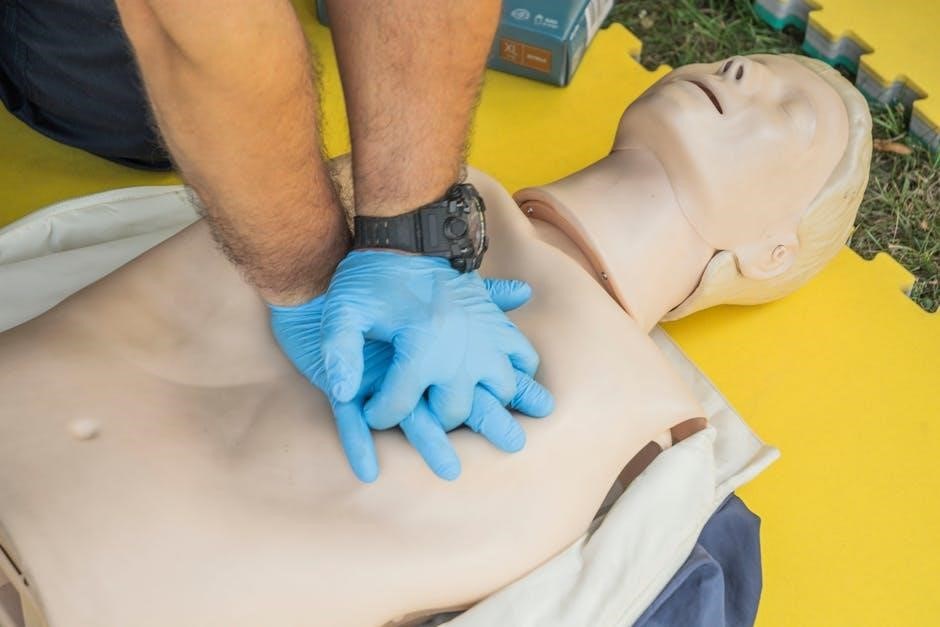
Comparing manual and mechanical CPR reveals challenges in attributing injuries solely to mechanical devices, especially when preceded by manual compressions, complicating injury assessment.
Comparison of Injury Risks
Assessing injury risks between manual and mechanical CPR is complex. Studies, like Smekal et al.’s prospective trial involving 222 unsuccessful resuscitation cases (83 manual, 139 mechanical), highlight the difficulty in isolating injuries caused specifically by mechanical devices.
Because mechanical CPR often follows a period of manual compressions, definitively attributing specific injuries becomes problematic. This inherent challenge necessitates careful consideration when evaluating outcomes and potential complications arising from both resuscitation methods.
Limitations of Attributing Injuries
Determining the source of injuries during cardiopulmonary resuscitation presents significant limitations. As noted in the review by Remino et al. (2018), mechanical devices are frequently implemented after a period of manual CPR. This sequential application complicates the process of pinpointing whether specific injuries stem from the mechanical intervention or pre-existing trauma caused by initial manual compressions.
Consequently, establishing a clear causal link between the device and observed harm remains a substantial challenge for researchers and clinicians alike.
Maintenance and Cleaning
Regular inspection and diligent disinfection protocols are essential for maintaining manual resuscitators. This ensures optimal functionality and prevents cross-contamination during critical use.
Disinfection Protocols
Following each use, manual resuscitators require thorough disinfection to eliminate potential pathogens. Manufacturers’ guidelines should be strictly adhered to, often recommending wiping down all surfaces with an approved disinfectant solution. Particular attention must be paid to the mask, valve mechanism, and reservoir bag.
Complete disassembly, when possible, facilitates comprehensive cleaning. Avoid harsh chemicals that could degrade the materials. Proper drying is crucial before storage to prevent mold growth and maintain device integrity, ensuring readiness for subsequent emergency situations.
Regular Inspection of Components
Consistent inspection is paramount for maintaining manual resuscitator functionality. Regularly check the reservoir bag for cracks or deterioration, ensuring it inflates and deflates smoothly. The valve mechanism must be examined for proper sealing and responsiveness, preventing air leaks.
Oxygen inlet connections should be verified for tightness and absence of damage. Masks require scrutiny for tears or wear. Documenting these inspections aids in tracking component lifespan and scheduling timely replacements, guaranteeing optimal performance.

Advanced Techniques
Manual resuscitators can be utilized with endotracheal tubes for targeted ventilation, and also support spontaneous breathing with low-resistance valves, enhancing patient care.
Use with Endotracheal Tubes
Manual resuscitators seamlessly integrate with endotracheal tubes, enabling direct ventilation of the lungs, bypassing the upper airway. This technique is crucial when a secure airway is established, offering precise control over delivered tidal volume and respiratory rate. Connecting the resuscitator to the endotracheal tube via a standard 15 or 22 mm fitting ensures a tight seal, maximizing ventilation efficiency. Skilled practitioners can effectively manage ventilation parameters, optimizing oxygenation and minimizing potential complications, providing a vital intervention in critical scenarios.
Spontaneous Ventilation Support
Manual resuscitators can assist patients exhibiting spontaneous breathing efforts, augmenting their own respiratory drive. Utilizing a resuscitator with a low-resistance valve and an air entrainment prevention disc allows for supplemental oxygen delivery without completely overriding the patient’s intrinsic rhythm. This approach supports, rather than replaces, natural ventilation, minimizing ventilator-induced lung injury. Careful monitoring and adjustment are key to providing optimal assistance, ensuring adequate oxygenation while preserving the patient’s respiratory muscle function.

Role in COVID-19 and Pandemic Response
Manual resuscitators served as critical ventilator alternatives during the COVID-19 pandemic, particularly when resources were scarce, providing essential respiratory support to patients.
Ventilator Alternatives
Manual resuscitators proved invaluable as alternatives to mechanical ventilators during the COVID-19 pandemic, especially when faced with overwhelming demand and limited availability of advanced respiratory equipment. Their portability and reliance on oxygen sources—requiring only 50 psi—made them adaptable in diverse settings.
While not replacing ventilators entirely, they offered a crucial means of providing respiratory support, bridging the gap for patients awaiting more sophisticated intervention, and sustaining life during critical periods of resource scarcity.
Importance During Resource Scarcity
Manual resuscitators demonstrated critical importance during times of resource scarcity, notably highlighted by the COVID-19 pandemic. When ventilator availability was limited, these devices provided a readily accessible means of respiratory support. Their operational simplicity—requiring only a 50 psi oxygen source—allowed for deployment in diverse settings, even where advanced infrastructure was lacking. This accessibility proved life-saving, offering a vital bridge for patients awaiting more comprehensive care.

Future Trends in Resuscitation Technology
Resuscitation technology is evolving, integrating monitoring devices with manual resuscitators and focusing on improved valve systems for enhanced efficiency and patient outcomes.
Integration with Monitoring Devices
Future manual resuscitators will likely incorporate real-time monitoring capabilities, displaying vital signs like EtCO2, respiratory rate, and oxygen saturation directly on the device or wirelessly transmitted to central stations. This integration allows clinicians to assess ventilation effectiveness immediately, adjusting compression rates and volumes accordingly; Such advancements promise more informed resuscitation efforts, optimizing patient care and potentially improving survival rates by providing crucial feedback during critical interventions.
Development of Improved Valve Systems
Next-generation manual resuscitators will feature valves with significantly reduced resistance, ensuring efficient oxygen delivery and minimizing operator fatigue. Designs incorporating discs to prevent air entrainment during spontaneous ventilation will become standard; These advancements will allow for more reliable high-percentage oxygen administration while maintaining the ability to manually support breathing, ultimately enhancing patient outcomes and simplifying emergency respiratory care.